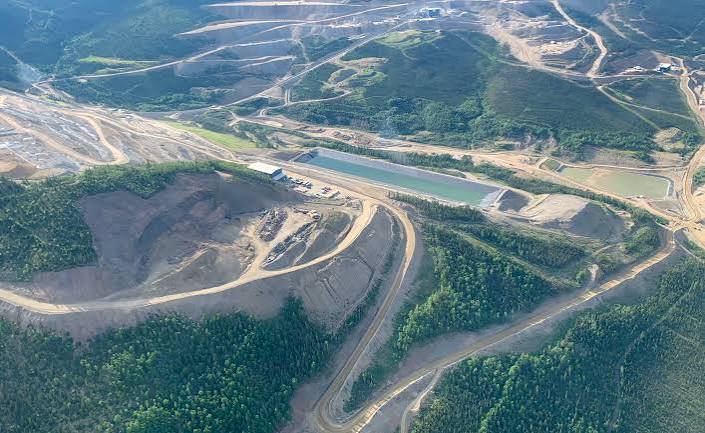
A shuttered Yukon gold mine that became the site of one of Canada’s most serious recent mining accidents may soon have a new owner. Singapore-based Boroo Pte. has agreed to buy the Eagle Gold mine for $140 million and has pledged roughly $1.4 billion in investment to clean up the site and bring it back into production. The deal, reported on October 22, still requires court approval, which Boroo plans to seek in December.
The agreement marks a major step toward resolving the future of a mine that has been closed for more than two years and under the control of a court-appointed receiver.
What Happened at the Eagle Gold Mine
Eagle Gold, located in central Yukon, was developed by Victoria Gold Corp. and was among the territory’s largest gold producers. In June 2024, the mine’s heap-leach facility failed, sending about two million tonnes of ore and water laced with cyanide into the surrounding environment. Heap leaching uses a cyanide solution to extract gold from piles of crushed ore, so a failure of this kind raises serious concerns about water contamination and ecological damage.
Following the collapse, mining stopped and a court-appointed receiver took control of the operation. Since then, the focus has been on stabilizing the site, containing contamination and finding a buyer with the resources to manage both remediation and a potential restart.
Inside Boroo’s $1.4 Billion Plan
Boroo’s investment pledge is split into two main parts. The company plans about $800 million in capital spending between 2027 and 2029 covering environmental rehabilitation, water treatment infrastructure, geotechnical stabilization and phased restart activities. A further $600 million or more would be spent over the mine’s initial life to support and extend mining operations.
Boroo entered an exclusivity agreement in April 2026 to explore buying the site. Since then, it says it has committed substantial technical, environmental and financial resources and developed its own plan to stabilize the property, complete remediation and restart production. The Yukon government was expected to hold a news conference to discuss the sale. Readers can find the report on Boroo’s planned purchase from The Canadian Press on BNN Bloomberg.
Why the Yukon Gold Mine Deal Matters for Investors
For investors in Canadian mining, the transaction offers several signals. First, it shows that foreign buyers remain willing to commit large sums to Canadian gold assets, even distressed ones. Gold prices have been elevated in recent years, which improves the economics of restarting mines that might otherwise have been written off. A buyer willing to fund a $1.4 billion programme is clearly betting that the remaining resource can justify both cleanup and new production.
Second, the deal is a reminder of the specific risks attached to individual mining stocks. Victoria Gold shareholders saw the value of their investment collapse after the heap-leach failure. Investors in single-asset producers face concentrated exposure: an operational accident, environmental incident or regulatory shutdown at one site can wipe out most of a company’s value. Diversified miners, gold exchange-traded funds or royalty and streaming companies can offer ways to gain gold exposure with less single-site risk.
Third, the $140 million purchase price is small compared with the planned investment, underlining that the true cost of reviving a damaged mine lies in remediation and rebuilding rather than acquisition.
Restarting a damaged Yukon gold mine is also a lengthy process. Boroo’s own timetable places the bulk of its rehabilitation and restart spending between 2027 and 2029, which suggests meaningful gold output is unlikely to resume immediately after the sale closes. Investors and suppliers counting on a quick rebound in production should temper expectations, as permitting, engineering work and environmental approvals will all need to be completed before full operations can return.
Implications for Yukon and Local Communities
For Yukon, the sale could bring renewed economic activity, including jobs in remediation, construction and eventually mining. The territory’s economy relies heavily on resource development, and the closure of one of its largest mines was a significant blow to employment and government revenue.
At the same time, the environmental legacy of the failure remains a central concern. The mine sits on the traditional territory of the First Nation of Na-Cho Nyäk Dun, and the impact on land, water and wildlife has been a major issue for local communities. Any restart will likely face close scrutiny from regulators, Indigenous governments and residents, who will want assurances that the heap-leach design and water treatment systems meet higher standards than before.
Foreign Investment and Canadian Mining Policy
The deal also touches on broader questions about foreign ownership of Canadian resources. Ottawa has tightened reviews of foreign investment in critical minerals in recent years, but gold is not generally classified as a critical mineral, and Boroo is a private company based in Singapore. Still, governments are likely to weigh the buyer’s environmental and financial commitments carefully, given the scale of public concern after the 2024 failure.
If approved, the transaction could serve as a template for how distressed Canadian mines are handled: a receivership process followed by a sale to a buyer prepared to take on cleanup obligations in exchange for future production. That model could become more common as miners revisit older or damaged assets in a high gold price environment.
Key milestones to watch include the December court hearing, any conditions attached by the judge or regulators, and the Yukon government’s position on the buyer’s remediation commitments. Details on financial assurances, such as how cleanup obligations will be secured if plans change, will be especially important given the scale of the 2024 failure and the public cost of managing the site since then.
Conclusion
Boroo’s planned $140 million purchase of the Eagle Gold mine, backed by a $1.4 billion investment pledge, offers a potential path forward for a Yukon gold mine left crippled by the 2024 heap-leach disaster. For investors, it highlights both the appetite for Canadian gold assets and the concentrated risks of single-mine companies. The court hearing in December, along with details from Yukon officials, will determine whether the plan can move ahead and restore a once-major source of Canadian gold production.