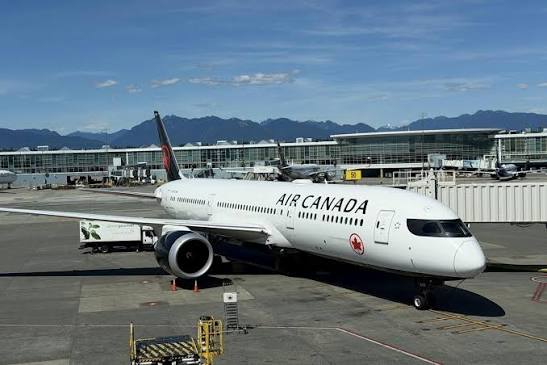
Air Canada is trimming its map of Air Canada US routes for next year, confirming that four transborder services will disappear beginning in summer 2027. The country’s largest airline plans to stop flying from Vancouver to Nashville and Raleigh-Durham, from Toronto to Charleston, South Carolina, and from Montreal to Seattle. The decision lands at a time when travel between Canada and the United States remains well below where it stood only two years ago, and it offers a useful window into how the carrier is redeploying aircraft as demand patterns change.
The airline confirmed the plans in an email to CTVNews.ca on Thursday, October 22. Spokesperson Sean Davidson said the company routinely reviews its schedule to keep capacity in line with what customers want and where they are travelling. Beyond that general explanation, Air Canada did not detail why these four city pairs were chosen.
Which Air Canada US Routes Are Being Cut
The four services being phased out share a common profile: each links a Canadian hub with a mid-sized American city that is not a primary business or leisure gateway for most Canadian travellers. Vancouver to Nashville and Vancouver to Raleigh-Durham connect the West Coast with the U.S. Southeast, a long and relatively thin market. Toronto to Charleston served a seasonal leisure crowd, while Montreal to Seattle linked two cities that already have many alternative connections through other hubs.
Customers are not losing access to every destination. Air Canada said it will continue serving Nashville, Raleigh-Durham and Seattle from other Canadian airports, meaning travellers will likely need to connect or depart from a different city. Davidson did not say whether Charleston will remain on the network in any form, leaving open the possibility that the South Carolina city drops off the Air Canada schedule altogether.
Cross-Border Travel Is Still Recovering
The route changes sit against a backdrop of weaker transborder traffic. Trips between the two countries have declined in recent years as trade friction and political tension weighed on Canadians’ appetite for U.S. vacations. Statistics Canada figures show that return trips by Canadian residents from the United States in July were 25.6 per cent below the level recorded in July 2024. That is a striking gap for what is normally the peak of the summer travel season.
There are signs of stabilisation. Statistics Canada data indicate cross-border travel rose steadily over the summer months, and U.S. residents made 701,800 trips to Canada in August. Even so, the recovery has been uneven, and airlines are adjusting their networks to match where passengers are actually willing to go rather than where they flew before the downturn.
For an airline, a route that flies half-empty is costly. Fuel, crew and airport fees are largely fixed per flight, so a thin market with soft pricing can quickly become unprofitable. Pulling aircraft off weaker routes and moving them to stronger ones is a standard way for carriers to protect margins without shrinking their overall fleet.
New Routes and Added Capacity Elsewhere
The cuts are only half of the story. A week earlier, Air Canada announced three new U.S. routes aimed at summer 2027 travellers: Toronto to Louisville, Kentucky; Montreal to Indianapolis, Indiana; and Edmonton to Newark, New Jersey. The airline is also upgrading its Edmonton to San Francisco service to a larger Airbus A220, with Davidson saying the carrier will increase capacity on that route.
This mix of exits and entries suggests a network reshuffle rather than a retreat from the American market. Newark and San Francisco are major gateways with strong onward connections, while Louisville and Indianapolis may be targets with less direct competition. Investors watching the stock should read the changes as an effort to improve the profitability of each seat rather than as a signal that Air Canada is giving up on transborder flying.
The United Airlines Joint Venture Factor
Air Canada’s U.S. strategy is closely tied to its partnership with United Airlines. The two carriers are working together on seasonal U.S.-to-Canada flights beginning next summer, including Denver to Ottawa and Quebec City, a seasonal Newark to St. John’s service, an expanded Washington, D.C. to Quebec City route and a further expansion of Denver to Winnipeg. Separate reporting earlier this month said the airlines are looking to renew their joint venture covering Canada-U.S. flights.
Joint ventures allow partners to coordinate schedules and share revenue on overlapping routes, which can make it easier to drop a weaker service on one side while the partner covers the market through its own hubs. For Canadians flying to secondary U.S. cities, that often means more itineraries routed through United hubs such as Denver, Newark or Washington. Interestingly, several of the new partnership routes bring American travellers into Canadian cities, which could help support inbound tourism if U.S. demand keeps improving.
What It Means for Investors and Travellers
For shareholders, pruning weaker Air Canada US routes is generally welcome. Airlines live and die on load factors and yields, and a willingness to prune underperforming flying can support earnings when demand is soft. The more important question is whether the redeployed aircraft earn better returns elsewhere, which will become clearer once the 2027 summer schedule is in place and the company reports traffic and revenue figures.
Readers who want the original announcement can review the report on Air Canada phasing out four U.S. routes in 2027, which lists the affected and new destinations. Investors should also watch transborder travel data from Statistics Canada over the coming months, since a sustained rebound could prompt carriers to add capacity back, while continued weakness could lead to more cuts across the industry.
For households, the practical effect is modest but real. Travellers in Vancouver who used the nonstop flights to Nashville or Raleigh-Durham will likely face connections or longer journeys, and Toronto residents who enjoyed direct access to Charleston may need to look at other carriers or connecting options. Anyone holding tickets for travel after the changes take effect should check with the airline about rebooking options well before departure.
Broader Signals for the Canadian Travel Sector
Air Canada’s moves reflect a wider adjustment across the Canadian travel industry. Demand for U.S. trips has not returned to its earlier strength, and airlines, tour operators and hotels are adapting to a market where Canadians are more selective about heading south. At the same time, the push to bring more American visitors north through the United partnership shows the industry is looking for growth in both directions.
Conclusion
The planned removal of four Air Canada US routes in 2027 is less about shrinking and more about reshaping. With Canadian travel to the U.S. still well below 2024 levels, Air Canada is moving aircraft toward larger gateways, new mid-market cities and partnership flying with United. For investors, the key test will be whether this reallocation lifts profitability. For travellers, it means fewer nonstop options to some American cities and more reliance on connections.