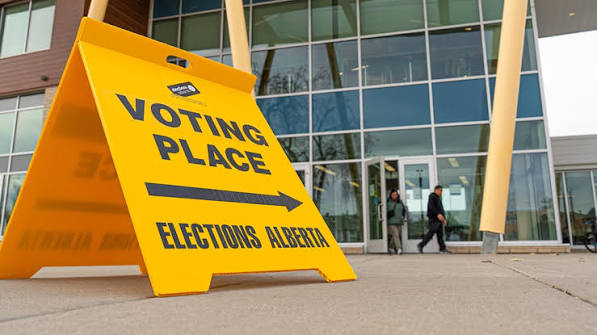
Alberta voters have decisively rejected leaving Canada, and the Alberta referendum result is likely to be welcomed by investors who had been watching the vote for signs of political instability in one of the country’s most important economic regions. About 76 per cent of voters chose to remain part of Canada on the separation question, according to results that began to be released late on Monday, October 19, 2026.
The outcome closely matched months of polling. Surveys since January had shown roughly 70 per cent support for staying in Canada, and a January Ipsos poll found about three in 10 Albertans backed independence, with only around half of those appearing firmly committed. For markets, the confirmation of that polling removes a source of uncertainty that had hung over the province for much of the year.
Inside the Alberta Referendum Result
The separation vote, known as Question 10, was counted first. Premier Danielle Smith had added it to the ballot in May, after a Court of King’s Bench judge quashed a separatist petition from the group Stay Free Alberta, citing a duty to consult First Nations. Smith said the referendum would not directly trigger separation, so the ruling did not apply. The broader referendum had been announced on February 19 with nine questions on immigration and the Constitution.
Participation was remarkable. More than 1.35 million votes were cast in advance polls and through special mail-in ballots, compared with about 810,000 cast that way in the 2023 provincial election. Elections Alberta received 519,082 mail-in ballots by the deadline, a tenfold increase from 2023, and hired more than 48,000 workers to count ballots around the clock. Early results were delayed by more than three hours because several polling stations opened late. The remaining nine questions were expected to be announced by Wednesday. Full details are available in this Global News report on the referendum results.
Why Investor Certainty Matters
Political risk is one of the factors global investors weigh when deciding where to place capital. A credible threat that a province might leave the federation raises difficult questions about the future of contracts, regulation, currency, debt obligations and trade arrangements. Thomas Lukaszuk, the former deputy premier who led the pro-Canada Forever Canadian movement, said international observers had been asking whether Alberta and Canada remained a safe place to invest and whether the country might split. He said the vote sends a message that those concerns are unfounded.
For long-term investors in large resource projects, pipelines and infrastructure, that certainty is valuable. Energy developments often require billions of dollars and decades of stable operating conditions. A clear vote to remain in Canada lowers the perceived risk that the legal and fiscal framework could be upended, which can support investment decisions and potentially lower the cost of capital for Alberta-based companies.
What It Means for the Energy Sector
Alberta is the centre of Canada’s oil and gas industry and home to the oil sands, which hold some of the largest crude reserves in the world. The sector is a major contributor to national exports and federal and provincial revenues. Separatist sentiment has historically been fuelled by grievances related to energy policy, including the National Energy Program of the 1980s and more recent disputes over federal energy and environmental rules.
The vote does not resolve those tensions. Smith has said that a yes vote on the other nine questions would give her a mandate to negotiate a better deal with Prime Minister Mark Carney, who had urged Albertans to reject those questions. Energy investors will be watching closely to see whether talks between Edmonton and Ottawa produce more clarity on pipelines, emissions rules and market access. Stability in federal-provincial relations would likely be viewed positively by energy producers and the pipeline companies that move their product to market.
Market access has become even more important since the Trans Mountain pipeline expansion entered service in 2024, giving Alberta producers more capacity to reach the Pacific coast and buyers beyond the United States. Ongoing trade tensions with Washington have strengthened the argument for diversifying export routes. Companies weighing new production or pipeline investments will be more comfortable doing so in a province whose place in Canada is not in question, and Canadian energy stocks could benefit from a narrower political risk discount over time.
The Alberta Referendum Result and the Canadian Dollar
The Canadian dollar is closely tied to commodity prices, especially crude oil, and to broader views about Canada’s economic stability. A vote to separate would have introduced major questions about the country’s fiscal position and the division of federal debt, issues that could have weighed on the loonie and on Canadian government bonds. By removing that scenario for now, the Alberta referendum result eliminates a potential source of currency volatility.
That said, the loonie’s direction will continue to depend mainly on oil prices, interest rate differentials between the Bank of Canada and the United States Federal Reserve, and trade developments with the United States. Political risk has been reduced, but it is only one input among many for currency traders.
Separatism Is Not Going Away
Investors should not assume the issue is permanently settled. Jeffrey Rath, co-founder of the Alberta Prosperity Project, said the separatist movement is not going anywhere and plans to seek a special general meeting to test Smith’s support within the United Conservative Party. Smith has said no follow-up referendum would be held during her government’s current mandate. Lukaszuk argued that the province united behind Canada, while Alberta NDP leader Naheed Nenshi wrote that the vote had saved Canada and that the focus now shifts to Alberta. The referendum cost about $130 million, according to Lukaszuk.
Conclusion
The Alberta referendum result delivered a clear message of unity, with roughly three-quarters of voters choosing to stay in Canada. For investors, it reduces political risk around the energy sector and the Canadian dollar, offering welcome certainty for capital-intensive projects. The next phase, including results on the remaining questions and any negotiations between Alberta and Ottawa, will determine whether that certainty translates into stronger investment in the province.