Treasury Secretary’s Visit Highlights Challenges in Aligning US and European Strategies on China
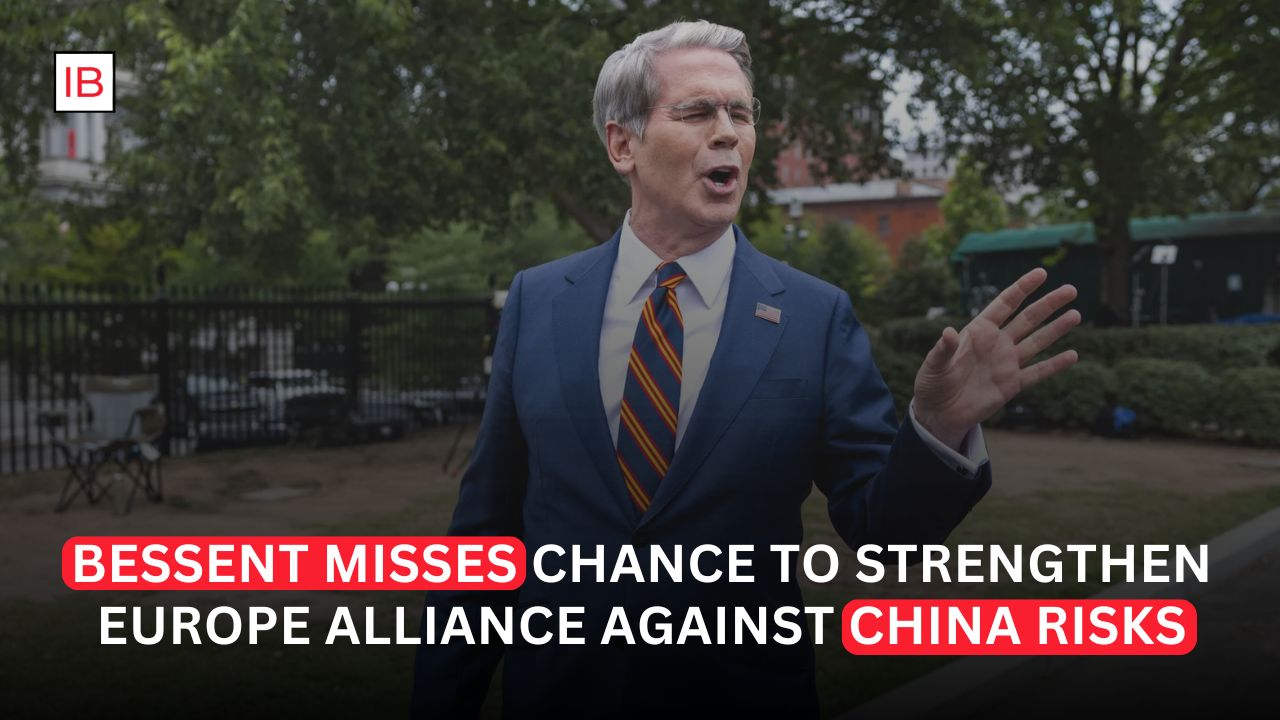
U.S. Treasury Secretary Scott Bessent concluded a series of meetings with European counterparts without securing broader economic coordination on policies toward China, underscoring the growing difficulty of building a unified Western approach to trade, technology, and industrial policy. While both the United States and Europe increasingly share concerns about economic dependence on China, differences over trade priorities, investment strategies, and diplomatic engagement continue to limit deeper cooperation.
European governments have become more cautious about China’s economic influence in recent years, particularly in strategic industries such as semiconductors, electric vehicles, telecommunications, and critical minerals. However, many European economies also maintain extensive commercial ties with China and remain reluctant to adopt policies that could significantly disrupt trade or investment.
Shared Concerns, Different Priorities
Although Washington and European capitals broadly agree that reducing excessive economic dependence on China is desirable, important differences remain over how quickly such changes should occur.
Key areas of discussion included:
- Supply chain resilience.
- Technology security.
- Investment screening.
- Industrial competitiveness.
- Trade diversification.
European officials generally favor reducing strategic vulnerabilities while preserving commercial engagement where possible.
Europe Pursues “De-Risking”
Rather than broad economic decoupling, the European Union continues promoting a strategy commonly described as “de-risking.”
This approach focuses on:
- Diversifying supply chains.
- Protecting critical technologies.
- Expanding domestic industrial capacity.
- Maintaining selected economic cooperation with China.
The strategy seeks to balance economic security with continued international trade.
US Seeks Stronger Alignment
Washington has encouraged allies to coordinate more closely on policies involving strategic industries.
Areas receiving particular attention include:
- Semiconductor production.
- Artificial intelligence technologies.
- Export controls.
- Critical minerals.
- Advanced manufacturing.
The United States argues that greater coordination would strengthen collective economic security while reducing exposure to geopolitical risks.
Business Community Watches Carefully
Global companies continue monitoring policy developments because China remains one of the world’s largest markets.
Businesses face increasingly complex decisions regarding:
- Supply chain locations.
- Manufacturing investment.
- Technology transfers.
- Regulatory compliance.
- Market access.
Many multinational firms are expanding operations in alternative markets while maintaining significant business activities in China.
Geopolitics Influencing Economic Policy
Economic policy has become increasingly intertwined with national security considerations.
Governments across advanced economies are placing greater emphasis on:
- Strategic industries.
- Domestic manufacturing.
- Investment screening.
- Economic resilience.
These priorities continue reshaping international trade and investment patterns.
Looking Ahead
Scott Bessent’s meetings highlighted both the growing convergence and the remaining differences between the United States and Europe regarding economic relations with China. While both sides recognize the importance of strengthening supply chain resilience and protecting strategically important industries, Europe continues to favor a more measured “de-risking” strategy rather than broader economic separation. As a result, achieving a fully coordinated transatlantic approach remains challenging despite shared geopolitical concerns.
Going forward, continued dialogue between Washington and European governments is likely to focus on balancing economic competitiveness, national security, and global trade stability. Whether closer coordination ultimately emerges may depend on future geopolitical developments, evolving industrial policies, and the willingness of both sides to reconcile their different economic priorities while maintaining strong transatlantic partnerships.